
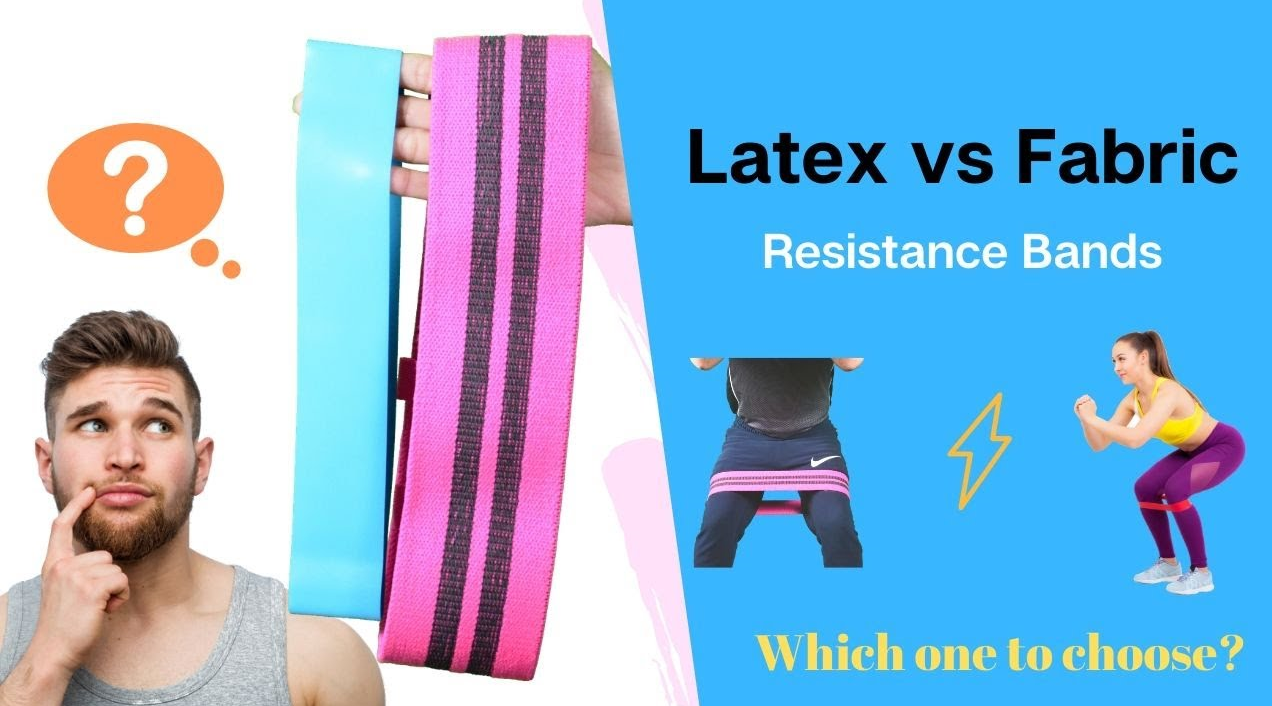
You’re three sets into a glute workout, sweat building, and your band rolls up your thigh for the fourth time. You stop, tug it back down, lose your rhythm. Sound familiar?
That single annoyance — the rolling, the pinching, the snap of latex against skin — is exactly why the fabric resistance bands vs latex debate got so loud in the first place. Resistance bands are no longer a niche rehab tool. The global market sat at roughly 1.66billionin2025andistrackingtoward1.87 billion in 2026, growing at around 12.7% a year. Walk into any gym, physio clinic, or home setup and you’ll see two materials dominating the basket: traditional latex and the newer fabric bands.
But “newer” doesn’t automatically mean “better.” And the marketing around both gets fuzzy fast. So let’s cut through it — what’s actually inside each band, how they perform, and which one deserves a spot in your training bag (or your wholesale order).
What Are Fabric & Latex Resistance Bands, Really?
Let’s clear up a misconception right away, because it trips people up constantly.
A “latex resistance band” is exactly what it sounds like — a continuous loop or strip made from natural rubber latex. Thin, stretchy, that familiar rubbery smell. These have been around for decades, originally popular in physical therapy and later adopted by the fitness world for everything from assisted pull-ups to banded squats.
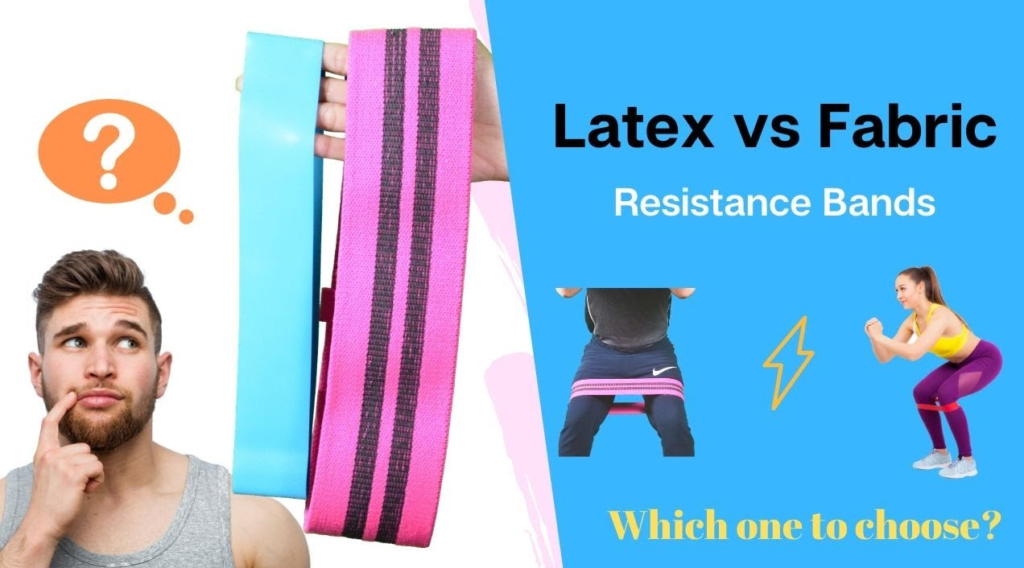
A “fabric resistance band,” though? Here’s the surprise: most fabric bands aren’t actually latex-free. The outer layer is cotton or polyester, but the stretch comes from latex or elastane threads woven inside. So when someone picks up a fabric band thinking they’ve dodged latex entirely, they may not have — unless the product is specifically labeled latex-free. We’ll come back to that, because it matters a lot for anyone with a latex sensitivity.
The fabric band is the newer arrival on the scene, emerging after mini loop bands went mainstream. It was built to solve the problems latex mini bands kept creating — mainly the rolling and the pinching — and it’s now the go-to for lower-body and glute work.
Material & Construction: What’s Actually Inside
The difference in construction is where everything else stems from.
Latex bands are a single, homogeneous material. Natural rubber latex, stretched and formed into loops, strips, or tubes. No layers, no blending — just rubber. That simplicity is part of why they’re cheap to produce and why they stretch so dramatically: natural latex can elongate to six or even seven times its resting length. The catch is that the safe working range is closer to three to four times the original length. Push past that and you’re courting a snap.
Fabric bands are a layered build. Picture a woven sleeve — typically cotton, polyester, or a blend — with elastic threads (latex or elastane) running through the weave. Manufacturers tune the resistance two ways: by changing the number of elastic threads, or by adjusting the band’s length while keeping thread count fixed. This gives fabric bands a softer, more textile-like feel against the skin, and the woven surface grips better than bare rubber.
That construction also makes fabric bands more customizable from a manufacturing standpoint. The outer fabric accepts printed patterns, logos, and colorways far more readily than raw latex — something worth noting if you’re sourcing custom-branded fitness products.
Resistance Curve & Performance
This is the part most comparison articles gloss over, and it’s arguably the most important.
Latex and fabric bands don’t just feel different — they resist differently throughout a movement. It comes down to the resistance curve.
Pure latex has a highly progressive curve. The further you stretch it, the harder it pulls back, and that increase isn’t linear — it ramps up sharply toward the end of the range. For someone doing a banded pull-apart or a shoulder mobility drill, that’s a feature: you get light resistance at the start and a real challenge at full extension, which is great for working a complete range of motion.
Fabric bands have a more linear, controlled curve. The tension builds steadily rather than spiking, so you get more constant resistance throughout the movement. Less of that abrupt “burn” at the top, more even time under tension.
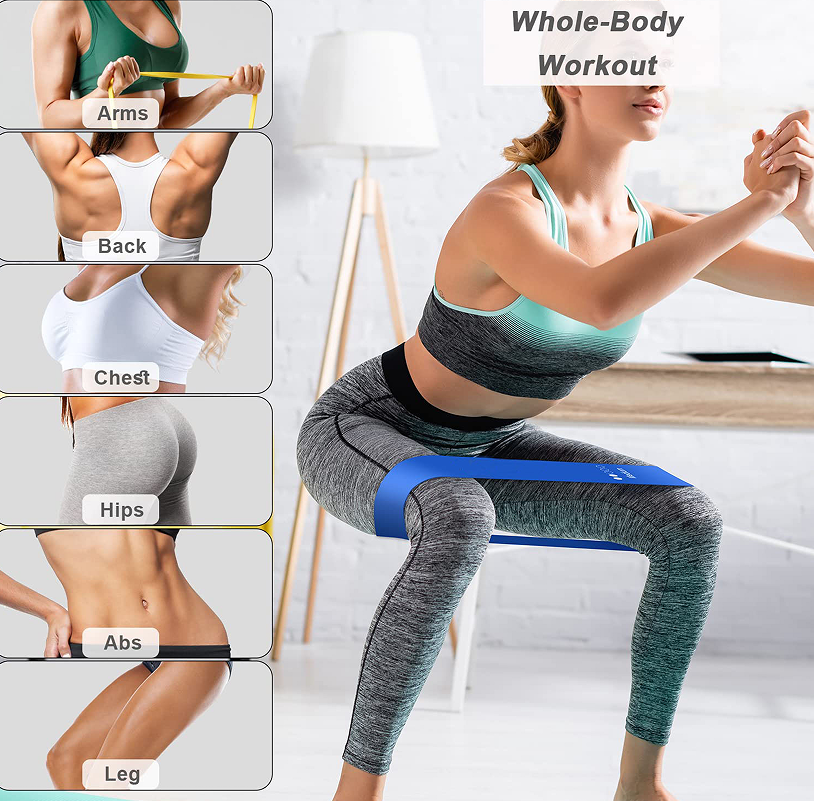
What does that mean in practice? Latex rewards explosive, full-range movements and precise activation work — think shoulder prehab, assisted pull-ups, dynamic mobility. Fabric shines when you want sustained, controllable tension, especially in lower-body exercises where you’re holding positions or moving through partial ranges.
A typical fabric band set comes in three tiers: light (5–15 lbs), medium (15–30 lbs), and heavy (30–50 lbs). Latex bands span a wider spectrum, from feather-light therapy bands to thick pull-up assist bands rated well over 100 lbs. So if versatility and maximum resistance range matter to you, latex still wins on paper.
Practical takeaway: Pick latex when you want a wide resistance range and progressive tension. Pick fabric when you want steady, predictable resistance that won’t jerk you around mid-rep.
Comfort, Grip & the Rolling Problem
Let’s talk about the thing that drives everyone crazy: rolling.
If you’ve ever used a latex mini loop band around your thighs during squats or lateral walks, you know the drill. The band is smooth, your skin (or leggings) is smooth, and physics does its thing — the band migrates, rolls into a thin cord, and starts digging in. Some people power through it. Most people just get annoyed.
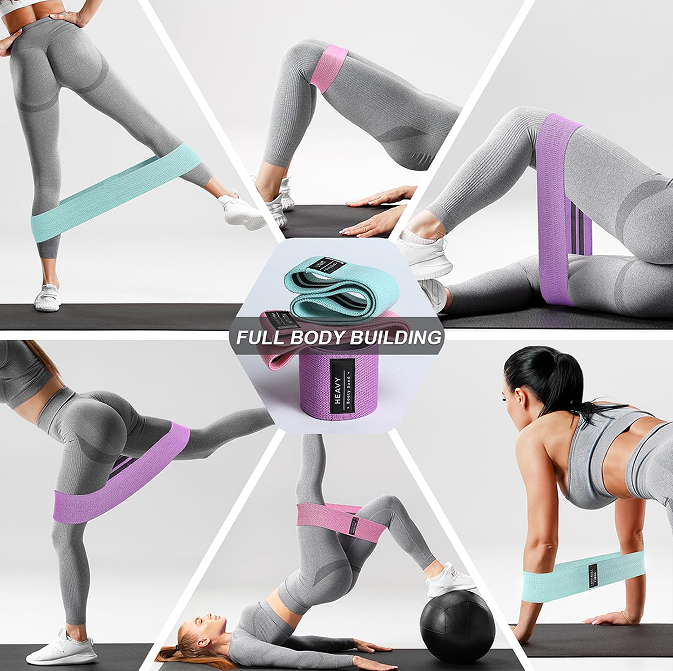
Fabric bands were essentially engineered to fix this. The woven cotton-polyester surface creates friction against skin and fabric, so the band stays where you put it. No rolling, no pinching, no stopping mid-set to readjust. For glute bridges, hip thrusts, banded squats, and abduction work, that stability is a genuine quality-of-life upgrade.
Latex bands aren’t uncomfortable by default — on bare skin during upper-body work, the rubber grip can actually feel secure. It’s specifically the lower-body, high-friction scenarios where latex mini loops struggle. Tubular latex bands with protective sleeves avoid the issue entirely, but those are a different product category.
Grip matters beyond comfort, too. A band that shifts mid-movement changes the resistance angle and can turn a clean rep into an awkward one. Stability isn’t just about feeling good — it affects how effectively you load the target muscle.
Practical takeaway: For any banded lower-body work where the band sits on your thighs or legs, fabric is the clear comfort winner. For upper-body and mobility work, either works fine.
Durability & Lifespan
Nobody wants to replace bands every few months, so durability is a real decision factor.
Here’s the honest picture: with proper care, a quality resistance band — latex or fabric — lasts about one to two years. That’s not a marketing number; it’s the realistic lifespan before elasticity degrades or material fatigue sets in.
Latex has a specific failure mode you should know about. It’s prone to drying out, and over time you’ll see warning signs: small cracks, tears, pinholes, or bulges in the rubber. Ignore those and you risk a snap — and a snapped latex band whipping back can genuinely injure you. The fix is simple maintenance: wipe latex bands with a 100% silicone lubricant every week or two, keep them out of direct sunlight, and never stretch beyond that 3–4× safe range. Store them cool and dry.
Fabric bands face different wear. The elastic threads inside can degrade with heavy use, and the cotton-polyester outer can lose tension or fray at the seams after extended pounding. But they don’t snap back violently the way latex can, and the woven construction means a partial failure usually shows as a gradual loss of resistance rather than a sudden break. That’s a meaningful safety advantage.
For commercial settings — gyms, studios, physical therapy clinics — the gradual-failure profile of fabric bands is appealing because it’s predictable. You replace on a schedule rather than reacting to a snap incident.
Practical takeaway: Both last 1–2 years with care. Latex needs silicone maintenance and careful stretch management. Fabric degrades more gracefully and carries less injury risk at end-of-life.
Latex Allergy & Skin Safety
This is where the fabric-vs-latex choice stops being about preference and starts being about health.
Natural rubber latex allergy is real and more common than people assume. According to research published in the World Allergy Organization Journal, prevalence among groups with frequent latex exposure ranges from 3% to as high as 64% depending on the population studied. In the general public, rates are lower but not negligible.
For anyone with a confirmed latex sensitivity — or even unexplained skin irritation during workouts — natural latex bands are a genuine concern. Symptoms can run from contact dermatitis (redness, itching, hives) to, in rare cases, more severe reactions.
Here’s the catch we flagged earlier: most fabric bands still contain latex threads. So “fabric” does not automatically mean “latex-free.” If you’re buying for allergy reasons, you must look for bands explicitly labeled latex-free, where the elastic component is elastane, TPE, or another synthetic. The same applies if you’re sourcing for a studio or clinic where you can’t screen every client for latex sensitivity — latex-free options remove the risk entirely.
Beyond allergy, the softer fabric surface is simply gentler on skin during high-rep, high-friction workouts. No rubber burn, no chafing. For physical therapy and rehab settings especially, that matters.
Practical takeaway: Latex allergy or sensitive skin? Skip natural latex. But don’t assume all fabric bands are safe — verify they’re labeled latex-free. For commercial or clinical use, latex-free is the responsible default.
Price & Value: The Cost Question
On price, latex wins the shelf-tag battle almost every time. Natural rubber is cheap to produce, and latex bands have been manufactured at scale for decades. A basic set of latex mini loops might run you 10–15. Fabric bands typically cost more — often 20–35 for a three-level set — because the woven construction and material blending add manufacturing complexity.
But price-per-band is the wrong lens if you actually use them. The better question is cost-per-workout and cost-per-month-of-use. Factor in that fabric bands don’t roll (so you’ll actually use them instead of abandoning them in a drawer), resist snap-back injuries, and tend to degrade gracefully, and the value gap narrows considerably.
For anyone buying in volume, the calculus shifts again. If you’re outfitting a yoga studio, equipping a hotel gym, or placing a bulk order for a fitness brand, the per-unit difference compounds. Latex bands offer a lower floor on unit cost, which matters at scale. But fabric bands offer better customization potential — printed logos, branded colorways, patterned surfaces — which can justify a higher retail price point and protect margin.
Many resistance band manufacturers offer OEM and private-label options for both materials. When sourcing from a supplier, the key questions are the same regardless of material: material certifications (REACH, RoHS, OEKO-TEX), batch testing protocols, and whether they can produce consistent resistance levels across runs.
Practical takeaway: Latex is cheaper upfront and at scale. Fabric costs more but offers better branding potential and a gentler failure mode. For bulk buyers, weigh unit cost against customization value and replacement frequency.
Which Workout Suits Which Band?
Rather than declare a universal winner, here’s how the two materials map to real training scenarios.
Go with fabric bands for:
- Glute bridges, hip thrusts, and banded squats (no rolling = uninterrupted sets)
- Lateral band walks and abduction work
- Any lower-body exercise where the band sits on the thighs
- Beginners who want comfortable, predictable resistance
- Rehab and physical therapy (gentler on skin, controlled curve)
- Latex-sensitive users (with verified latex-free fabric bands)
Go with latex bands for:
- Assisted pull-ups and heavy resistance work (wider max resistance range)
- Shoulder prehab, banded pull-aparts, and upper-body mobility
- Dynamic stretching and full-range activation (progressive curve shines here)
- Travel and home gym setups where portability and low cost matter
- Anyone who needs a broad resistance spectrum in one inexpensive set
Use both when: You’re building a well-rounded training toolkit. Latex for activation and mobility, fabric for controlled lower-body intensity. They complement each other better than most people realize.
For commercial buyers equipping a fitness studio or yoga studio, stocking both covers every member’s need. Offer latex for the functional-training crowd and fabric for the barre, Pilates, and glute-focused classes.
Related Reading: Suede Vs. Pu Yoga Mat | Which Is Best For Your Workout
Fabric vs Latex: Quick Comparison Table
| Dimension | Fabric Bands | Latex Bands | Edge |
|---|---|---|---|
| Material | Cotton/polyester + elastic threads | Natural rubber latex | — |
| Resistance curve | Linear, steady | Progressive, sharp at end range | Depends on goal |
| Max stretch | Medium–high | Very high (6–7× length) | Latex |
| Safe stretch range | More forgiving | 3–4× original length | Fabric |
| Rolling on thighs | Stays put | Tends to roll | Fabric |
| Skin comfort | Soft, no chafing | Can pinch/rub | Fabric |
| Latex allergy safe | Only if labeled latex-free | No | Fabric (conditional) |
| Snap-back injury risk | Low (gradual failure) | Moderate (sudden snap) | Fabric |
| Durability | 1–2 years, degrades gracefully | 1–2 years, needs silicone care | Tie |
| Resistance range | Limited tiers (5–50 lbs typical) | Wide (therapy to 100+ lbs) | Latex |
| Price | Higher ($20–35/set) | Lower ($10–15/set) | Latex |
| Customization | Excellent (prints, logos, colors) | Limited | Fabric |
| Best for | Lower body, glutes, rehab | Upper body, mobility, pull-ups | — |
Buying Advice & Sourcing
A few practical notes whether you’re buying for yourself or sourcing at scale.
For individual buyers: Start with your primary use case. Lower-body and glute focus? Get a fabric set. Full-body mobility and pull-up assistance? Latex. If budget allows, grab both — they’re inexpensive enough that owning both costs less than a single pair of training shoes. Always check that fabric bands are labeled latex-free if allergy is a concern.
For B2B buyers — studio owners, brand sellers, gym operators: The decision factors multiply. You’re thinking about unit cost across a bulk purchase, replacement cycles, branding requirements, and member safety.
A few things to prioritize when sourcing from a manufacturer or supplier:
- Material certifications. Ask for REACH, RoHS, and OEKO-TEX documentation, especially if the bands will contact skin during high-friction use. A certified factory should provide these without hesitation.
- Custom branding options. Fabric bands accept screen printing, woven labels, and full-color patterns — ideal for private-label programs. Latex bands offer less surface real estate but can take simple logo stamps.
- Consistent resistance levels. Request batch testing data. Inconsistent resistance across a production run is the most common quality complaint with bulk orders, and it undermines trust in branded product.
- Commercial-use durability. For gym equipment supply, factor replacement frequency into your total cost. Fabric’s predictable degradation can actually lower lifetime cost despite a higher upfront price.
- Minimum order quantities and lead times. Manufacturers vary widely. Some support low MOQs for brand testing; others are built for high-volume runs. Match the supplier to your stage.
If you’re already sourcing yoga mats or other fitness equipment, bundling resistance bands into the same production relationship often improves pricing and simplifies logistics — something worth raising with your supplier early.
FAQ
Are fabric resistance bands latex-free?
Not always. Most fabric bands contain latex or elastane threads woven inside the cotton-polyester outer. If you need latex-free bands for allergy reasons, look for products explicitly labeled “latex-free” where the elastic component is synthetic.
Which is better for glutes, fabric or latex bands?
For most people, fabric bands. They stay in place on the thighs without rolling, provide steady resistance through partial ranges, and are more comfortable during high-rep glute work. Latex works too but tends to shift and pinch during lower-body exercises.
Do latex resistance bands snap?
They can, yes. Overstretching beyond 3–4 times the original length, exposure to heat and sunlight, and age-related cracking all increase snap risk. A snapped latex band can whip back and cause injury. Inspect bands regularly for cracks, tears, or bulges, and replace at the first sign of damage.
Why do my latex bands keep rolling?
Latex is smooth and creates little friction against skin or leggings, so it migrates and rolls during movement — especially on the thighs. Fabric bands solve this with a woven surface that grips and stays put.
How long do resistance bands last?
With proper care, quality bands of either material typically last one to two years. Latex bands benefit from periodic silicone lubricant treatment and cool, dry storage. Fabric bands should be air-dried after sweat-heavy sessions.
Can I use resistance bands for physical therapy?
Yes. Many physical therapists recommend fabric bands for rehabilitation because they apply smooth, even resistance without jerky tension, and the soft surface reduces skin irritation. Always follow your therapist’s specific guidance on resistance level and exercise selection.
Which is cheaper, fabric or latex bands?
Latex bands are cheaper upfront — often half the price of a comparable fabric set. But factor in comfort, durability, and actual usage, and fabric bands often deliver better real-world value, especially for lower-body training.
The Final Verdict
So, fabric or latex — which wins?
Neither, universally. But here’s the honest breakdown:
If your training leans lower-body and glute-focused, you value comfort, you’re tired of bands rolling, or you have any latex sensitivity — fabric bands are the better choice. They stay put, feel better against skin, and fail safely.
If you need maximum resistance range, progressive tension for mobility and activation work, a tight budget, or serious pull-up assistance — latex bands earn their place. They’re versatile, affordable, and proven.
And if you’re sourcing for a studio, brand, or gym? Stock both. Different members want different things, and offering the full range is how you serve everyone well.
The global resistance bands market is growing at double digits for a reason — these tools work. The material you choose just determines how comfortably and how long they’ll work for you. Pick based on how you actually train, not on which one the internet declared the winner this week.