
If you’ve ever shopped for resistance bands, you’ve probably stumbled across the latex vs TPE debate. One listing says “100% natural latex” like it’s a badge of honor. Another proudly claims “TPE — latex-free and hypoallergenic.” Both sound convincing. And honestly, both are right — but for different people.
Most buyers don’t realize that the material of a resistance band changes pretty much everything about how it performs. The stretch, the snap, how long it lasts, whether it smells weird after a month, even whether your skin breaks out — it all comes down to what the band is made of.
In this article, I’m going to break down the real differences between latex and TPE resistance bands across six categories that actually matter when you’re working out. No marketing fluff. Just facts with context.
What Are We Actually Comparing?
Before diving into the comparisons, let’s be clear about what these materials are — because they’re fundamentally different at the molecular level.
Latex resistance bands are made from natural rubber latex, harvested from the sap of rubber trees (Hevea brasiliensis). The sap gets processed, vulcanized, and formed into layers that create the band. High-quality bands use a multi-layer dipping process — essentially building thickness one coat at a time — which gives them a smooth, consistent stretch profile.
TPE (Thermoplastic Elastomer) is a synthetic material. It’s a blend of plastic and rubber polymers engineered to behave like rubber at room temperature but process like plastic when heated. TPE is not one single formula — there are dozens of TPE compounds out there, which is why not all TPE bands feel the same. Some are soft and silky; others feel almost waxy. It depends entirely on what the manufacturer put into the blend.
So right away, this isn’t just “natural vs synthetic.” It’s a single-origin material vs a designed material. Both have strengths. Both have tradeoffs.

1. Elasticity and Stretch — The Feel of the Band
This is the number one thing you’ll notice. Pick up a latex band and a TPE band side by side, give them both a pull, and the difference is immediately obvious.
Latex: More Stretch, Smoother Build-Up
Latex bands can stretch up to roughly 6 times their resting length before they hit their limit. That’s a lot of room to work with. More importantly, the resistance builds gradually — what trainers call “linear variable resistance.” The further you pull, the harder it gets, but the transition is smooth. There’s no sudden wall where the band refuses to budge.
Why does this matter in practice? Think about a bicep curl. At the bottom of the movement, your arm is extended and your muscle is mechanically weaker. At the top, when your elbow is fully flexed, you’re stronger. A latex band mirrors this pattern — lighter at the start, heavier at the finish. It works with your body’s natural strength curve, not against it.
That’s also why latex bands are popular for dynamic movements — mobility flows, warm-ups, explosive drills. The stretch gives you room to accelerate through a range of motion.
TPE: Shorter Pull, Faster Ramp-Up
Most TPE bands stretch about 100% to 300% of their original length. Significantly less give. The resistance climbs faster and feels firmer earlier in the movement.
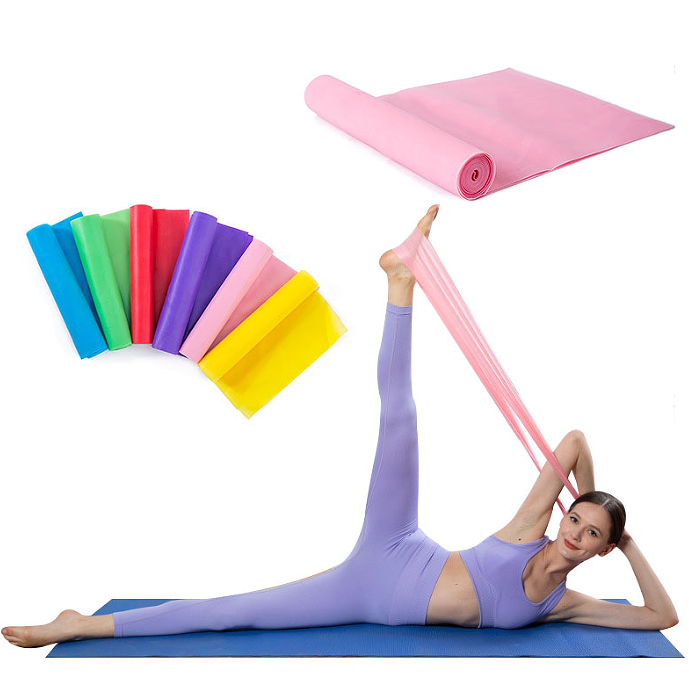
For some exercises, this is actually an advantage. If you’re doing short-range strength work — partial squats, glute bridges, banded deadlifts — you might prefer the immediate tension. The band loads the muscle right away instead of waiting for you to reach the deep stretch zone.
The tradeoff is that TPE can feel “dead” at the end of the stretch. Some people describe it as hitting a wall — the band just stops giving. Latex doesn’t do that, or at least not as abruptly.
Quick take: If you want long range of motion and progressive resistance, go latex. If you want immediate tension and don’t need extreme stretch, TPE works fine.
2. Durability — What Happens After Hundreds of Workouts
Durability is where the gap between latex and TPE gets pretty wide.
Latex Holds Up — With a Catch
A well-made latex band, properly cared for, can last years of regular use. That’s not an exaggeration. I’ve seen people use the same set of latex bands for three to four years without a snap. The natural rubber has excellent tear resistance — the molecular chains redistribute stress instead of concentrating it at a single weak point.
But here’s the catch: latex degrades when exposed to UV light, high heat, and certain oils. Leave your latex bands in a hot car or direct sunlight for a few weeks, and they’ll start to get brittle. Body oils and sweat can also break down the surface over time, especially if you never wipe them down. A little care goes a long way — more on that later.
TPE: Resists the Elements, Wears Faster Under Load
TPE bands have the opposite durability profile. They’re more resistant to environmental factors — sunlight, temperature swings, humidity — than latex. You can leave a TPE band in your gym bag in the trunk and it probably won’t crack the way latex might.
But under actual training stress, TPE doesn’t hold up as well. With regular moderate use, most TPE bands start developing surface cracks within about a year. If you’re doing high-resistance work or consistently stretching them near their limit, that timeline shortens. Once cracks appear, the band’s on borrowed time — a snap is coming.
The material science behind this is straightforward: TPE is a physical blend, not a chemical bond. Repeated stress eventually separates the polymer phases, leading to micro-tears that grow into visible cracks. Latex, being a cross-linked natural polymer, distributes that stress more evenly.
Quick take: If you store your bands properly and don’t mind basic maintenance, latex outlasts TPE by a wide margin. If you need something that can handle being tossed around and abused, TPE might actually last longer in your hands — because it tolerates neglect better.
3. Texture, Grip, and Comfort
This is a surprisingly personal factor. What feels “right” to one person feels awful to another.
Latex: Tacky and Grippy
Latex has a naturally tacky surface. When you wrap it around your thigh or press it against your shoe, it grabs. It doesn’t slide. For a lot of athletes, this is a feature — the connected feel gives you confidence during explosive reps.
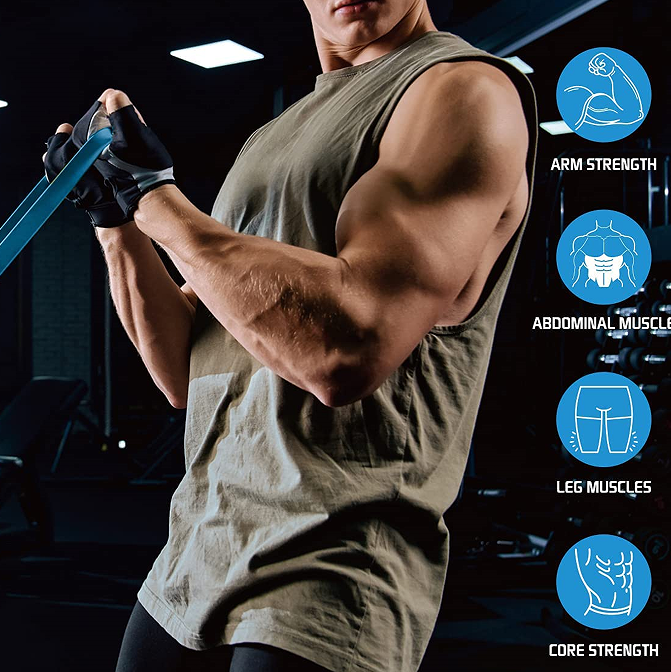
The downside? That tackiness can cause friction. If you’re doing high-rep sets with the band against bare skin, the repeated rubbing can get irritating. Some people also dislike the slight “rubber smell” that latex bands have, though quality bands air out quickly.
TPE: Smoother, More Skin-Friendly
TPE bands typically have a smoother, sometimes matte finish. They glide over skin more easily, which reduces friction irritation during long sets. This is one reason TPE gets recommended for yoga and Pilates — you’re moving through poses with the band in contact with your skin for extended periods, and a smooth band just feels better.
The flip side of smoothness? The band can creep. If you’re using a TPE band above your knees during squats, don’t be surprised if it slides down mid-set. Some manufacturers compensate with textured surfaces or ridges, but in general, TPE just doesn’t grip the way latex does.
Quick take: Prefer traction and a “locked in” feel? Latex. Want a softer touch with less skin friction? TPE.
Related Reading: What Is The Difference Between Epp And Eva Foam Rollers?
4. Environmental Impact
This section matters more to some people than others, but the difference between the two materials is striking enough to deserve attention.
Latex: A Renewable Resource
Natural latex comes from rubber trees — a renewable resource. The trees absorb CO₂ as they grow, and the tapping process (harvesting the sap) doesn’t kill the tree. A rubber tree can produce latex for 25 to 30 years. At the end of its life, the band itself is biodegradable. It’ll break down naturally over time, unlike petroleum-based materials.
The carbon footprint of latex production is also meaningfully lower. One estimate puts TPE production emissions at over double those of natural latex processing. That’s not a trivial gap.
TPE: Recyclable in Theory, Problematic in Practice
TPE is technically recyclable. In theory. In reality, most municipal recycling systems aren’t equipped to handle TPE products, and the infrastructure for TPE-specific recycling is limited. So the band you toss in the blue bin probably ends up in a landfill — where it won’t biodegrade for a very long time.
To be fair, TPE manufacturers have been working on more sustainable formulations, including partially bio-based TPEs. But as of today, the environmental math leans clearly in latex’s favor.
Quick take: If sustainability is part of your purchasing criteria, latex is the straightforward winner.
5. Allergies and Safety
This is the one area where TPE wins cleanly — and for some people, it’s the only factor that matters.
The Latex Allergy Reality
Natural rubber latex contains proteins that can trigger allergic reactions. The prevalence of latex allergy in the general population sits at about 4.3%, though rates are higher among healthcare workers (9.7%) and people who’ve had repeated latex exposure.
Reactions range from mild (skin redness, itching) to severe (hives, respiratory issues). If you know you have a latex sensitivity, the decision’s already made — don’t use latex bands. Even if you’ve never had a reaction, pay attention the first few times you use latex bands, especially if you have other allergies (people with certain food allergies, like banana or avocado, can have cross-reactivity with latex).
TPE: The Safe Bet
TPE contains no natural rubber proteins. It’s hypoallergenic in the sense that it won’t trigger a latex-type immune response. This makes TPE the default choice for rehabilitation clinics, hospitals, and anyone with known latex sensitivity.
That said, TPE isn’t completely irritation-free. Friction from repeated use, pressure points during intense workouts, and the occasional sensitivity to certain plasticizers used in TPE formulations can all cause skin issues. But these are mechanical irritations, not allergic reactions — different mechanism, generally milder.
Quick take: If you have any latex sensitivity, TPE is the clear and correct choice. If you don’t, latex is safe for the vast majority of users.
6. Cost and Long-Term Value
Let’s talk numbers — not just the sticker price, but what you’re actually paying per workout.
Upfront Cost
Latex bands typically cost 20-30% more than comparable TPE sets. A decent latex set might run you 25−40, while an equivalent TPE set is often 15−30. The price gap comes from higher raw material costs for natural latex, plus more labor-intensive manufacturing (multi-layer dipping vs extrusion).
Cost Per Use
Here’s where it gets interesting. If a latex set lasts three years and a TPE set lasts one year, you’re buying three TPE sets in the time you’d buy one latex set. That 20TPEsettimesthreeis60 over three years. That $30 latex set looks like the better deal now.
The break-even math really depends on usage. Light users who work out once or twice a week might never wear out a TPE band. In that case, the cheaper upfront cost wins. But for consistent training — three to five sessions a week — latex almost always comes out ahead on long-term value.
Which Material for Which Workout Style?
Instead of declaring one material universally “better,” here’s how the choice maps to what you actually do:
| Workout Style | Recommended Material | Why |
|---|---|---|
| Heavy strength training | Latex | Better durability under high tension, smoother progressive resistance |
| Yoga / Pilates | TPE (or latex) | TPE’s smooth surface feels better during slow, controlled poses; latex also works if you prefer grip |
| HIIT / explosive training | Latex | The larger stretch range supports dynamic movements |
| Rehabilitation / physical therapy | TPE | Hypoallergenic, safer for clinical settings, easier to control |
| Outdoor / boot camp | TPE | Better UV and temperature resistance |
| Travel / on-the-go | Either | Both are portable; TPE may be slightly lighter |
| Eco-conscious buyer | Latex | Renewable, biodegradable, lower carbon footprint |
A Practical Note on Band Care
Regardless of which material you choose, how you treat your bands determines how long they last. A few simple habits make a huge difference:
- Wipe them down after use. Sweat and body oils degrade both materials over time. A quick wipe with a damp cloth takes 10 seconds.
- Don’t store them in direct sunlight. UV is particularly bad for latex, but TPE also benefits from being kept in a cool, dark place.
- Avoid sharp surfaces and rough edges. Check your anchor points — a rough door anchor can nick a band and create a tear point.
- Inspect before each use. Look for cracks, thin spots, or discoloration. If a band looks suspect, retire it. A snapped band to the face is not a good workout.
- Store flat or loosely coiled. Tightly folding or knotting bands creates stress points that weaken the material over time.
Conclusion
After digging through the research and looking at both materials from every angle that matters, here’s where I land:
Choose latex if durability, performance feel, and long-term value are your priorities — and you don’t have a latex allergy. The extra stretch range, smoother resistance curve, and multi-year lifespan make it the go-to for serious training.
Choose TPE if you need a latex-free option, prefer a smoother texture, or work out in variable environments where the band will face sun, heat, or rough handling. It’s also a perfectly reasonable budget entry point if you’re just getting started with resistance training.
Neither material is inherently “bad.” The mistake most people make is buying based on price or brand name without understanding what the material means for their specific workouts. Now you know.